Cleanroom HVAC desig
What Exactly Is Cleanroom HVAC Design?
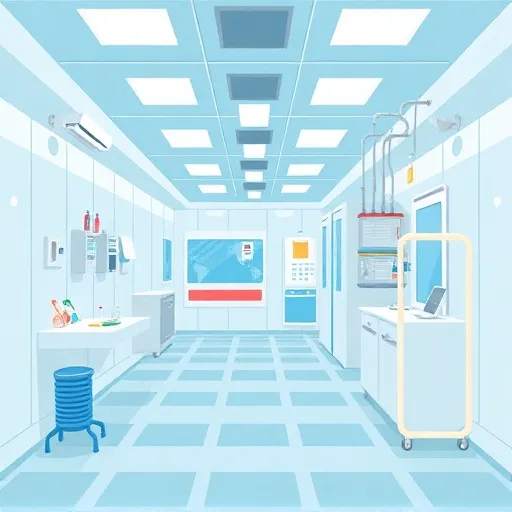
At its core, cleanroom HVAC design is the engineering discipline dedicated to building and maintaining controlled environments where airborne particles, temperature, humidity, and pressure are all tightly regulated to hit specific standards. Unlike a regular commercial HVAC system that just keeps folks comfortable, a cleanroom HVAC design is built entirely around contamination control.
Here's a simple way to think about it: a standard air conditioning system moves air to keep a room at 72°F. A cleanroom HVAC design moves air to keep that same room at 72°F, at 45% relative humidity, with fewer than 100 particles per cubic meter, and at a positive pressure differential of 0.05 inches of water column compared to the adjacent space. That's a whole different level of engineering.
The cleanroom HVAC design process involves carefully balancing several critical factors:
- Air filtration — using HEPA filters and ULPA filters to capture particles at the sub-micron level
- Airflow patterns — unidirectional airflow (laminar) or non-unidirectional airflow (turbulent) depending on the ISO classification
- Pressure differentials — maintaining cascade pressure between zones to prevent cross-contamination
- Temperature and humidity control — often to tolerances tighter than ±1°F and ±2% RH
- Air change rates — ranging from 10-15 ACH for lower classifications to 600+ ACH for the most stringent environments
Why Cleanroom HVAC Design Matters More Than Ever in 2026
The demand for controlled environments has absolutely exploded. Advanced semiconductor manufacturing, mRNA-based therapeutics, cell and gene therapy, precision optics, and aerospace components all require environments that are cleaner than ever before. Regulatory bodies have tightened their requirements, and the margin for error has shrunk to nearly zero.
In 2026, a single contamination event in a pharmaceutical fill line can cost millions. In semiconductor manufacturing, a single particle can destroy an entire wafer lot worth hundreds of thousands of dollars. That's exactly why cleanroom HVAC design has evolved from a niche engineering specialty into a mission-critical discipline.
So what's changed recently? Quite a bit, actually:
- New international standards have introduced more nuanced ISO classification frameworks
- Energy efficiency requirements now demand smart optimization without compromising cleanliness
- Digital monitoring and AI-driven controls have become standard in new installations
- Modular cleanroom and prefabricated cleanroom systems have dramatically reduced construction timelines
Key Components of a Cleanroom HVAC Design
Air handling units (AHUs) are the heart of any cleanroom HVAC design. They condition the air — heating, cooling, humidifying, dehumidifying, and filtering it — before distributing it into the cleanroom. In cleanroom applications, AHUs are typically custom-built to handle the specific requirements of the space, including high static pressure demands and rigorous filtration stages.
Modern AHUs in 2026 often feature variable frequency drives (VFDs) for precise fan speed control, multi-stage filtration with pre-filters, intermediate filters, and final HEPA filters or ULPA filters, advanced coil designs for tight temperature and humidity control, and integrated sensors with IoT connectivity for real-time performance monitoring.
When it comes to filtration, HEPA filters capture 99.97% of particles at 0.3 microns. ULPA filters go even further, capturing 99.999% of particles at 0.12 microns. These filters are the backbone of contamination control in any controlled environment. Placement matters enormously — in a unidirectional airflow design, HEPA filters cover nearly the entire ceiling, pushing air downward in a piston-like motion. In a non-unidirectional airflow design, filters are placed strategically to dilute and remove airborne contaminants through mixing.
How air moves through your cleanroom determines how well it controls contamination. There are two primary airflow patterns: unidirectional airflow (laminar), where air moves in a single direction — typically from ceiling to floor — at a uniform velocity, used in the most stringent ISO classifications; and non-unidirectional airflow (turbulent), where air is supplied through diffusers and mixed throughout the room, which is more common in lower-classification spaces and generally more energy-efficient.
Pressure differentials are your first line of defense against cross-contamination. Cleanrooms are typically maintained at positive pressure relative to adjacent spaces, so air flows out — not in — when doors open. In some applications involving hazardous materials, negative pressure is used to contain contaminants within the space. Getting pressure control right requires careful design of supply and return air volumes, proper door interlocking systems, and real-time pressure monitoring with automated adjustments.
Depending on the application, temperature tolerances in a cleanroom can be as tight as ±0.5°F and humidity as tight as ±1% RH. This level of precision requires sophisticated control systems, high-quality sensors, and often redundant equipment to prevent any disruption. In pharmaceutical and biotechnology applications, humidity control is particularly critical — too much moisture can promote microbial growth, while too little can cause static electricity issues that damage sensitive components.
Understanding ISO Classifications in Cleanroom HVAC Design
ISO classifications define how clean a space needs to be. The most widely referenced standard in 2026 is ISO 14644-1, which classifies cleanrooms from ISO Class 1 (the cleanest) to ISO Class 9 (the least stringent). Here's a quick breakdown of how cleanroom HVAC design changes across classifications:
- ISO Class 1-3: Extremely high air change rates (500-700+ ACH), full unidirectional airflow, ULPA filtration, and rigorous particle monitoring. Used in advanced semiconductor fabrication.
- ISO Class 4-5: High air change rates (200-500 ACH), unidirectional airflow or mixed airflow, HEPA/ULPA filtration. Common in pharmaceutical sterile filling and biotechnology.
- ISO Class 6-7: Moderate air change rates (60-150 ACH), non-unidirectional airflow, HEPA filtration. Found in medical device manufacturing and compounding pharmacies.
- ISO Class 8-9: Lower air change rates (10-60 ACH), non-unidirectional airflow, HEPA filtration. Used in less critical manufacturing and research applications.
The higher the classification, the more energy your cleanroom HVAC design will consume — which is exactly why thoughtful design and energy recovery strategies are so important.
Energy Efficiency Strategies in Cleanroom HVAC Design
Cleanroom HVAC systems are notorious energy hogs. In some facilities, HVAC accounts for 50-70% of total energy consumption. That's a big deal, both financially and environmentally. In 2026, energy-efficient cleanroom HVAC design focuses on several key strategies.
Demand-controlled ventilation is one of them. Instead of running systems at full capacity 24/7, it uses real-time particle counting and occupancy sensors to modulate airflow based on actual conditions. When the cleanroom is unoccupied or particle counts are low, the system ramps down — saving energy without compromising cleanliness.
Energy recovery systems like heat wheels, run-around coils, and plate heat exchangers can recover 50-70% of the energy from exhaust air and use it to precondition incoming outdoor air. In a facility that moves tens of thousands of cubic feet of air per minute, that adds up fast. Optimized air change rates matter too — modern computational fluid dynamics (CFD) modeling allows engineers to optimize air change rates based on actual contamination risk, sometimes reducing them without any drop in performance. And high-efficiency electronically commutated motors with variable frequency drives are now standard, reducing energy consumption significantly compared to traditional constant-speed motors.
The Role of Digital Monitoring and Smart Controls
One of the biggest shifts in 2026 is the move toward fully digital, data-driven cleanroom environments. Modern cleanroom HVAC design incorporates real-time particle counters that continuously monitor contamination levels, wireless sensor networks for temperature and humidity control and pressure monitoring, building automation systems (BAS) that adjust HVAC parameters automatically, predictive maintenance algorithms that flag equipment issues before they cause problems, and dashboards that help facility managers maintain compliance documentation. These technologies don't just improve performance — they also reduce labor costs and minimize the risk of human error.
Design Considerations Across Industries
In pharmaceutical manufacturing, cleanroom HVAC design must comply with strict regulatory guidelines. The focus is on preventing microbial contamination, maintaining proper cascade pressure, and ensuring full traceability of environmental conditions. Aseptic filling areas often require ISO Class 5 environments with unidirectional airflow and strict personnel and material airlocks.
Semiconductor fabrication demands the most stringent cleanroom conditions. Particles as small as a few nanometers can cause defects. These facilities require ISO Class 1-3 environments, ultra-high air change rates, and vibration isolation for HVAC equipment. Chemical filtration using activated carbon and chemical media is also often required to remove airborne molecular contamination (AMC).
Healthcare facilities, operating rooms, compounding pharmacies, and medical device manufacturing facilities all require cleanroom HVAC design with specific considerations. These spaces balance patient safety, staff comfort, and contamination control — often with lower air change rates than semiconductor or pharmaceutical environments. Research laboratories that handle biological agents, nanomaterials, or sensitive samples need HVAC designs that account for containment, pressurization, and filtration, with negative pressure isolation rooms, biosafety cabinets, and fume hoods all interacting with the HVAC system as an integrated whole.
Common Mistakes in Cleanroom HVAC Design
Even experienced engineers can trip up on cleanroom projects. Some of the most common pitfalls include underestimating pressure differential requirements — leading to contamination migration between zones, sizing equipment too conservatively — resulting in excessive energy consumption, neglecting redundancy — a single AHU failure can shut down an entire production line, poor coordination with architectural and process designs, ignoring maintenance access, and failing to account for future expansion. Working with an experienced cleanroom HVAC design team from the very beginning can help you avoid these issues and build a system that performs reliably for years.
Future Trends Shaping Cleanroom HVAC Design
Looking ahead, several trends are poised to reshape cleanroom HVAC design. Sustainability and carbon footprint reduction are driving innovation in low-energy filtration, heat recovery, and renewable energy integration. Modular cleanroom and prefabricated cleanroom systems with integrated HVAC are becoming more popular because they reduce construction time and make it easier to expand or reconfigure spaces.
AI-driven optimization is starting to play a bigger role — AI algorithms can analyze data from thousands of sensors to optimize airflow, predict maintenance needs, and detect anomalies before they become problems. Researchers are also exploring alternative filtration technologies that offer higher efficiency with lower pressure drop, which could reduce the energy penalty associated with HEPA filters and ULPA filters. And as manufacturing processes become more sensitive, the industry is paying more attention to airborne molecular contamination — driving demand for advanced chemical filtration solutions.
Bottom line? Cleanroom HVAC design is a complex, multidisciplinary field that requires deep knowledge of airflow dynamics, filtration science, thermodynamics, and regulatory requirements. Whether you're building a new facility or upgrading an existing one, getting the cleanroom HVAC design right from the start saves money, reduces risk, and ensures your controlled environment performs exactly as needed. In 2026, the best cleanroom HVAC design approaches balance performance, energy efficiency, and flexibility — leveraging digital monitoring and smart controls, proven filtration and airflow patterns, and building with future growth in mind. Don't treat HVAC as an afterthought. It's the single most important system in your facility, and it deserves the attention, expertise, and investment required to get it right.